
(Part II) The Portuguese Community in the Volunteers and the defence of HongKong, 80 years after Liberation.
Updated: Aug 27
By Ruy Barretto SC, Anthony Correa and Prof Clifford Pereira
Internment and Prisoners of War (POW).
After the Invasion and fighting from 8th December 1941 to 25th December 1941 Hong Kong was occupied for 3 years and 8 months by the Japanese military. António da Silva gives some numbers of the POWs. Of the 800 Hong Kong Volunteer Defence Corps (HKVDC) prisoner of war (POW), 234 were Portuguese.[1]
However the number changed with circumstances. As Regimental Sergeant Major (RSM), i.e. senior veteran, Robert Everest's record shows, the number went down with demobilization and drafting to Japan. The Macanese Library list has about 243 names including those killed in action or dying as POWs.[2] These figures are ambiguous as the Portuguese Community members in Sham Shui Po (POW) camp were listed under 4 groups of “Nationality”, i.e. Portuguese, Hong Kong Portuguese, British Eurasian, or British, and one known member was listed as Russian. The figure of 234 Portuguese Volunteers who became POWs, probably includes those who were demobilized early. About 11 Portuguese Volunteers died as POWs in Hong Kong, Japan or elsewhere. In April 1942 most of the officers were transferred to Argyle Street Camp.

Photograph of medical officers and batmen inside POW camp,1944.
Rear: Soloman Bard, Sir Albert Maria Rodrigues MBBS (HK), Hon. LL. D (HK), FHKCGP, FRCP (Edinburgh), Geoffrey Balean
Front: Leonardo José da Silva,'Nobby' Clark, Carlos Pompeia de Azevedo de Castro Basto
POWs were used as forced labour, for example building the extension of the Kai Tak runway, and for tunnel work in Grampian Road, Waterloo Road and Argyle Street.[3] In September 1942 the First Draft for slave labour in Japan departed. During the 2nd Draft on the Lisbon Maru October 1942, 850 POWs were killed, but there is no record of Portuguese on board the vessel.[4] The Everest Lists have about 22 Portuguese in the draft of 15th December 1943 and about 68 in the draft of 29th April 1944. Thus 68 Portuguese POWs were sent to the Sendai coalmines and a photo taken before they came home on 30th August 1945 with their faces full of hope is published by António da Silva.[5]
My summary of Portuguese community involvement based on all references, and especially that of RSM Robert Everest, is that 27 Volunteers died in action or POW camps, 39 were demobilized after surrender, 88 drafted to Japan, 117 POWs were in Hong Kong at Liberation, hence a total at least 271 Portuguese Volunteers in active service. Add to this 6 others, mostly civilians dying from torture or execution, 14 civilians tortured, estimated 50 of the Community participating in the Police, the Hong Kong Police Reserve (HKPR), Air Raid Protection (ARP) and other disciplined units, over 30 in nursing and other disciplined services, and about 14 named by British Consul John Reeves, in his Memoir, ‘The Lone Flag’, based on his Macao diary, some of which were with BAAG and other units, and the Chindits or other resistance number about 20, bringing the subtotal to 134 participants.[6] This brings the total over 405 persons actively participated. Of these at least 33 died in action, as POWs or by torture or execution, i.e. about 10%. This does not include those deaths of civilians or in disciplined services whose contributions are not recorded.

Sendai POW Camp
Back: Henry Ribeiro, Francis Reis, Leo Souza, Cicero Rozario, Jeje Pereira, Tonin Sequeira, Alfred Prata, Richard Silva, Gussy Sequeira, Roberto Souza
Middle: Antonio F. 'Butter' Noronha, Johnny Ribeiro, Jimmy Remedios, Johnny Remedios, Henry Souza, A.C. Neves
Bottom: Billy Wilkinson, 'Mimi' Larcina, Jose Xavier, Roque Silva, Hug o Ribeiro, Dicky Noronha, EAV 'Eddy' Remedios
Collection AA "Junior" Remedios
Looking at Familias Macaenses by Dr Jorge Forjaz and the families to whom those deceased or tortured had belonged, you realize that for every person who died or was taken away for interrogation, torture or slave labour or imprisonment, there were whole families who would suffer the consequential fear and anguish. One can sense how the whole Community suffered during the war and thereafter the
permanent losses from injury, ill health and death. Forjaz research, the Everest Lists, and other lists of
Volunteers also reveal the proximity of several Eurasian families, some probably suffering more and sharing similar risks and losses.
Prisoners of War were incarcerated in camps mostly in Kowloon and Koo records how they could be visited by family members carrying food and clothing and essentials for life. Portuguese provided food for British and other internees who had no family outside to care for them.[7] Colonial Secretary Franklin Gimson specially noted this fact at length in his farewell speech after Liberation.
Portuguese non-combatants were generally not interned in Stanley Internment Camp. Vaudine England has a table with 1,203 Portuguese within a total of 6943 Third Nationals divided into 52 Categories.[8] Her tables give useful examples of the great variety of family names which help identify those in the Eurasian and Portuguese communities at the time.[9] Being Third Nationals, the Portuguese were required to obtain passes.[10]
Elsa Soares married Chester Bennett, an American who, when allowed out of Stanley Internment Camp, was involved in numerous activities to help the internees. He had refused to be repatriated to the USA and leave Elsa behind. He was executed with the 33 of 29th October 1943.[11] Some Portuguese were married to men interned in Stanley and helped provide food to the internees generally.
An unusual case was Thomas Edgar, the master baker of Lane Crawford who was not initially interned. He married Evelina Marques d’Oliveira in June 1942 but after the May 1943 arrests of Selwyn-Clarke and others, the couple were interned in Stanley where Thomas’s expertise with yeast enabled the survival of many internees. Lena, born in Macau, daughter of a tea merchant in Foochow, was one of the few Portuguese Stanley internees.[12] [13] Brian Edgar their son, gave a talk on their remarkable lives under occupation to Club Lusitano on 15th January 2026. Brian Edgar has written on the Un-Interned Irish Community in Occupied Hong Kong which is relevant as the Jesuit priests involved had close links to some of the Portuguese Community since their establishment in Hong Kong in 1926.
The Portuguese POWs were involved in numerous Camp activities, and as told by Luigi Ribeiro, they
were the noisiest group in POW Camp with their sound of laughter and singing.[14] They put on entertainments, variety shows, with the Portuguese illustrator Marciano “Naneli” Baptista creating setsand backdrops.[15] Luís Andrade de Sá and António da Silva provide some vivid descriptions. [16] Jorge Forjaz quoting from a letter from Bosco Correa, sets out the words of “Maria da Fonte”, the song adopted by the Portuguese Volunteers as their marching song and to keep up morale.[17] It was sung when 200 men were drafted and sent to Japan to work as slave labour in the mines.
Evan Stewart lists about 60 Volunteers who received special mention or honours for their war efforts, there are 7 Portuguese named including those who helped maintain morale, CSM M.F. de P. Baptista (Naneli), and Corporal N.C. Barretto, (Noel). Naneli Baptista was awarded an MBE.

Marciano Francisco de Paula Baptista MBE, Teresa Maria Baptista, Álvaro Maria Campos, Ana Teresa Pereira
Refugees, Resistance and Life under Japanese Occupation.
After the fighting and looting, food and essentials were in short supply. Chinese started leaving Hong Kong by the thousands on foot in long lines walking up the Tai Po Road towards their home villages in the Guangdong Province. This was the Japanese policy of depopulation.[18]
The struggle for survival affected the Portuguese Community who lost their jobs and their husbands’ sources of income, and homes.[19] Koo summarized how the situation deteriorated with terrible starvation over the years. Portuguese nationals and citizens of neutral countries were permitted to travel to Macao. The first group of about 900 Portuguese Refugees left for Macao on 6th February 1942. On 7th February about 600 left on river steamers, and on 20th April 1942 a third group left Hong Kong.[20] Portuguese Consul General in Hong Kong, Frank Soares issued travel documents and certificates of identity for many without official papers, enabling travel to the relative safety of Macao [21]
The Governor of Macao Gabriel Teixeira and the British Consul John Reeves, amongst many others, were instrumental in the care of HK Portuguese refugees. Nevertheless, Jorge Forjaz records numerous persons who died while refugees in Macao.
Some stayed in HK to care for family members in the POW Camps and Stanley or who were too old to leave or had to protect their homes and property against looters.[22] Here also, some joined the underground. The Club Lusitano became a haven in the battle and immediate aftermath.
The Soares Family story is summarized by Barnabas Koo. Frank Soares had 2 sons who were POWs. It was a great comfort to those who stayed in Kowloon, such as the D’Almada and Barretto families, also with sons who were POWs, that the Acting Consul for Portugal, Frank Soares not only stayed in Hong Kong but moved his consulate to his home at 2 Liberty Avenue in Kowloon. Their large home became a temporary refuge for dozens of people who defended their homes against looters with sporting guns, shot guns and other strategies. There is a tragic story linking the families. During the funeral service of Leonardo D’Almada e Castro Senior in 1943, buried in a temporary grave in the sandy hills of Ho Man Tin, the Soares family attending the funeral shockingly stumbled across the execution of one of their houseboys who had been beheaded for looting.[23]
The Portuguese Residents Association was started to assist with the distribution of food, with the Tsim
Sha Tsui Centre under Frank Barnes, Tung Cheung Building under Marcus Silva, and Peace Avenue, Ho Man Tin under Fernando D’Almada Remedios and others, and at Club Lusitano. Several members were suspected of working with the resistance and arrested and tortured.[24]

Francisco Soares, Portuguese Consul General, Hong Kong

British Consul in Macao, John Reeves
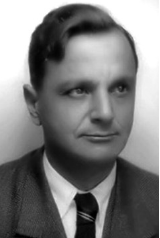
Governor of Macao, Gabriel Mauricio Teixeira

Club Lusitano Building and interiors at the time of WWII
Rosary Hill Red Cross Home was the Dominican St Albert’s Convent which became a Red Cross refuge for many homeless of several nationalities from September 1943. Initially 182 inmates were Portuguese, but many left for Macau when food shortages worsened, so by 1945 the number dropped to 135 Portuguese.[25] Vaudine England says 19 Portuguese were also in the French Hospital at St Paul’s Convent. She explains that rice rations stopped in April 1944, but that Rosary Hill was supplied until November 1944, thus many residents went to Macau in early 1945.[26]
A significant number of Portuguese and Eurasians continued to be part of the war effort by escaping via Macao and China to join or form other units including being flown to India to join the Chindits fighting the Japanese in jungle warfare in Burma, Anne Ozorio names and describes about 20 young
members of the Portuguese community who participated and escaped around April to December 1943.[27] Brigadier “Mad Mike” Calvert, with experience in jungle warfare, had known some of the Volunteers before the war, understood the values and abilities of the Hong Kong men, and invited them to join his unit, the 77th Brigade. The Hong Kong Chindits participated in the 2nd Chindit Expedition of 1944 and adapted remarkably well to the mountainous and jungle conditions. Chinese ex-Volunteers mostly comprised the Hong Kong Volunteer Company in the Chindits plus some Portuguese members who were formerly HKVDC, ARP and Royal Navy. A notable example was Harbour Officer Inspector Rufus Lizola Rocha’s family, whose sons Carlos and Estylito, and his grandchildren Carlos, Eduardo and Luis had participated. Another was Alberto Joao Xavier from Macau, formerly a constable of the Public Security Police (PSP).
Several Portuguese were in the paramilitary British Army Aid Group (BAAG) operating in Southern China or helped the resistance, such as Dr Horacio Ozorio who was a captain in the BAAG.[28] Dr Eduardo “Eddie” Gosano, was BAAG Agent Phoenix, and Miguel Alberto de Souza, known as Mickey, worked in the British Consulate and enabled the escape of allied persons to Free China.[29] Such persons enabled Leo D’Almada e Castro and his wife Tilly to escape through occupied China to join the Hong Kong Planning Unit set up in London to enable the Liberation of Hong Kong.[30]
After the Japanese Surrender of 15th August Dr Eddie Gosano, Y.C. Liang and Roger Lobo made a hazardous junk trip through mined waters from Macao during the night of 21st August 1945 delivering formal Colonial Office instructions to the Colonial Secretary Franklin Gimson in Stanley Internment Camp so he and other internees could gradually and diplomatically resume the Hong Kong
administration without further bloodshed.[31]
At least 14 persons are named by British Consul Reeves in his diary, which is probably only a handful of the many who actively helped the war effort in Macao.

Dr Eddie Gosano, Roger Lobo and YC Liang, were covert BAAG members in Macao. On 21 August 1945 they made a hazardous journey to Hong Kong to deliver messages on repossessing the colony for Britain.
Liberation.
On Liberation the reunions between sons and mothers, husbands and wives were particularly
poignant for the Portuguese Community whose families were nearby. The ordinary soldiers from far afield who had come to defend Hong Kong did not have such a welcome but had some benefit in being the first to be sent home.
For the Portuguese POWs, and those in Macao, it was back to work and duty immediately. Some were
on guard duty to prevent looting and others tried to put their lives and families and homes together as they picked up the pieces of their shattered lives in their various jobs, companies and skills.[32]
Many Portuguese went to work immediately helping to restore the administration and ensuring justice was delivered to some of those responsible for some of the war crimes. The survival of so many of the
Portuguese community in Macao helped the rapid restoration of civilian government, services and the economy of Hong Kong at Liberation.
After the war, Alberto Joao Xavier from Macau would take part in the London Victory Celebrations of
1946, as part of the ‘Hong Kong Contingent’.[33]
The loyalty of the Portuguese Community was well noted by the returning British administration.[34] In an extract written by Governor Grantham to the Colonial Secretary in 1949, he noted the loyalty of the 3,000 Portuguese of British Nationality, who had the interest of Hong Kong at heart. He said, “As Mr d’Almada so truly made clear in his speech [the Portuguese] have more claim to call themselves the real citizens of Hong Kong than either the Chinese or the expatriate British.” On 15th September 1945 the war time Colonial Secretary Franklin Gimson gave his Farewell speech. The short but moving speech is in Captive Years, The Occupation of Hong Kong.[35] [36] Having thanked those who helped him “in the immediate job of keeping the Colony going…” he pays tribute to some of the Portuguese and other communities. Gimson said:-
“But there are others in the Colony to whom some expression of gratitude which we, who were interned, feel towards them is long overdue. I refer to some of our fellow nationals of the Chinese, Portuguese and Indian communities who were left behind to bear the brunt of the Japanese oppression in Hong Kong and who in spite of persecution and privations, and in some cases even taking the extreme forms of torture and imprisonment, refused to do anything which would injure the cause of the United Nation, but rather did their utmost to promote it by any means in their power.
Some of us who were shut in behind barbed wire will never forget the assistance we got from many such kindly people, who with grave risk, heavy expense and much self-denial, sent parcels of supplies to us which may truly be said in many cases to have made all the difference between comparative good health and permanent disablement or even death. Since our release, the faithful cooperation of these loyal people has contributed materially to the smooth resumption of normal life here. It is my earnest hope that all who have behaved so nobly will regain their former livelihood and re-establish themselves, either in their private business or in the public service on a sound basis of prosperity, and that the government will do its utmost to assist in the restoration of such people to their rightful places in the life of the community.”
References:
[1] The Portuguese in China 1513-1999. By António M.P. Jorge da Silva. 2012. Pg.124
[2] Macanese Library.
[3] The Portuguese in Hong Kong and China – Beginning, Settlement and Progress to 1949. By Barnabas Koo. 2013. Pg.134.
[4] Clifford Pereira, Personal correspondence based on British war records. 2026.
[5] The Portuguese in China 1513-1999. By António M.P. Jorge da Silva. 2012. Pg.124.
[6] From Macau through China to India and Burma: Hong Kong and the Chindits. By Anne Rozario. 2005.
[7] The Portuguese in Hong Kong and China – Beginning, Settlement and Progress to 1949. By Barnabas Koo. 2013. Pg.134.
[8] Zindel’s Rosary Hill. By Vaudine England. In Journal of the Royal Asiatic Society, Hong Kong. Vol 57. 2017. Pp.45-47.
[9] Zindel’s Rosary Hill. By Vaudine England. In Journal of the Royal Asiatic Society, Hong Kong. Vol 57. 2017. Pp.55-56.
[10] The Portuguese in Hong Kong and China – Beginning, Settlement and Progress to 1949. By Barnabas Koo 2013. Pg.123.
[11] The Occupation of Hong Kong 1941-1945. By Philip Cracknell. 2022. Pg.145.
[12] The Occupation of Hong Kong 1941-1945. By Philip Cracknell. 2022. Pg.268.
[13] Famílias Macaaenses. By Jorge Forjaz. 2017. Vol. III. Pp. 848-851.
[14] The Portuguese in Hong Kong and China – Beginning, Settlement and Progress to 1949. By Barnabas Koo. 2013. Pg.135.
[15] The Boys from Macau. By Luís Andrade de Sá. 1999.
[16] The Portuguese Community in Hong Kong Silva: A Pictorial History. Vol II. By António M Pacheco Jorge da Silva. 2010. Pp. 39-41
[17] Famílias Macaaenses. By Jorge Forjaz. 2017. Vol. III. Pg. 790.
[18] The Portuguese in Hong Kong and China – Beginning, Settlement and Progress to 1949. By Barnabas Koo. 2013. Pg.137.
[19] The Portuguese in Hong Kong and China – Beginning, Settlement and Progress to 1949. By Barnabas Koo. 2013. Pp.131-132.
[20] The Portuguese in Hong Kong and China – Beginning, Settlement and Progress to 1949. By Barnabas Koo. 2013. Pg.123.
[21] The Macanese Diaspora in British Hong Kong: A Century of Transimperial Drifting. By Catherine Chan. 2021. Pg.202.
[22] The Portuguese in Hong Kong and China – Beginning, Settlement and Progress to 1949. By Barnabas Koo. 2013. Pp.128-131.
[23] The Portuguese in Hong Kong and China – Beginning, Settlement and Progress to 1949. By Barnabas Koo. 2013. Pp.124-138.
[24] The Portuguese Community in Hong Kong Silva: A Pictorial History. Vol II. By António M Pacheco Jorge da Silva. 2010. Pg. 30.
[25] The Occupation of Hong Kong 1941-1945. By Philip Cracknell. 2022. Pg.229.
[26] Zindel’s Rosary Hill. By Vaudine England. In Journal of the Royal Asiatic Society, Hong Kong. Vol 57. 2017. Pp33-66.
[27] From Macau through China to India and Burma: Hong Kong and the Chindits. By Anne Rozario. 2005. Pp122-125.
[28] Famílias Macaaenses. By Jorge Forjaz. 2017. Vol. III. Pg. 880.
[29] Famílias Macaaenses. By Jorge Forjaz. 2017. Vol. V Pg. 536.
[30] The Macanese Diaspora in British Hong Kong: A Century of Transimperial Drifting. By Catherine Chan. 2021. Pg.205.
[31] The Macanese Diaspora in British Hong Kong: A Century of Transimperial Drifting. By Catherine Chan. 2021. Pg.204.
[32] The Macanese Diaspora in British Hong Kong: A Century of Transimperial Drifting. By Catherine Chan. 2021. Pg.141.
[33] Old Soldiers Never Die: Hongkongers in the British Armed Forces (Expanded Edition). By Kwong Chi Man. 2018. Pg.124.
[34] The Macanese Diaspora in British Hong Kong: A Century of Transimperial Drifting. By Catherine Chan. 2021. Pg.142.
[35] Captive years: the occupation of Hong Kong, 1941-45. By Alan Birch and Martin Cole. 1982.
[36] Hong Kong Internment. By Geoffrey Emerson. 2008. Pg. 214.